

Most people get into backyard birding the same way — a bird shows up that they can’t immediately name, or a neighbor’s feeder is full of activity and theirs isn’t. Either way, the same few questions come up fast: what is that bird, what should I feed it, and how do I get more of them?
Birdbrella is built around those questions. Dozens of bird species regularly visit feeders and backyards across the U.S. — but the ones showing up in your yard depend on where you live, what you’re offering, and the time of year. The guides here give you practical answers specific to your setup and your region.
The goal is simple: help you recognize the birds you see, feed them the right way, and build a yard they want to revisit.
If you’re starting from scratch, the Simple Backyard Bird Setup is the fastest path to consistent feeder activity.
Jump to What You Need
- Where to Start
- Popular Backyard Birds
- Bird Feeding Guides
- Backyard Birds by State
- State Birds
- Backyard Bird Setups
- FAQ
Where to Start
The fastest way to get birds at a new setup is simple: a hopper feeder, black oil sunflower seed, placement 5–10 feet from shrubs or a tree line, and a birdbath if you can add one. Many yards will see activity within a few days, especially when feeders are placed near cover.
From there, it’s about understanding which birds are in your area, what they prefer, and how to keep them coming back. Which birds you see depends a lot on where you live — a yard in Indiana will look different from one in California or Texas. The Backyard Birds by State guides cover exactly that.
👉 Backyard Birds by State 👉 Backyard Birds by Species
Popular Backyard Birds to Know


Northern Cardinal
Bright red and hard to miss, the Northern Cardinal is one of the most reliably attracted backyard birds in the country. It visits feeders year-round and returns consistently once it finds a food source. Black oil sunflower seed in a hopper or platform feeder is all it takes to get started.
Best feeder: hopper or platform | Best food: black oil sunflower seeds
Black-capped Chickadee
Small, curious, and quick to explore new feeders — chickadees are often the first birds to show up after a new setup. They grab a seed, fly to cover, and come right back. A tube feeder with black oil sunflower seed brings them in fast and keeps them coming.
Best feeder: tube feeder | Best food: black oil sunflower seeds, sunflower chips
Goldfinches & Finches
American Goldfinches are brilliant yellow in summer and olive-toned in winter — one of those birds that surprises people once they notice the seasonal shift. They arrive in small groups and quickly become regulars. Nyjer (thistle) seed in a tube feeder is the most reliable draw.
Best feeder: tube feeder | Best food: nyjer seed, sunflower chips
Blue Jay
Bold, loud, and unmistakable. Blue jays dominate feeders when they visit, which is part of the appeal once you start watching them closely. Peanuts in a platform feeder bring them in reliably, and their alarm calls double as an early warning system for every other bird in your yard.
Best feeder: platform feeder | Best food: peanuts, sunflower seeds
Downy Woodpecker
The smallest woodpecker in North America and one of the easiest to attract. It clings vertically to suet feeders, is comfortable sharing space with other birds, and becomes a reliable regular — especially through fall and winter. The white back stripe makes it straightforward to identify.
Best feeder: suet feeder | Best food: suet, peanuts
Mourning Dove
Mourning doves are among the most common backyard birds in the country — and also one of the most overlooked. They prefer ground feeding and open space, so platform feeders or seed scattered beneath other feeders works well. Pairs often become daily yard fixtures once they find a reliable food source.
Best feeder: platform feeder, ground feeding | Best food: millet, sunflower seeds
Dark-eyed Junco
In most of the U.S., the arrival of dark-eyed juncos in fall is a reliable sign that winter is coming. They forage on the ground beneath feeders, flashing white outer tail feathers as they hop. Scatter millet or sunflower chips below your feeders — they rarely use tubes.
Best feeder: platform feeder, ground feeding | Best food: millet, sunflower chips
Bird Feeding Guides
Choosing the right feeder and food makes a bigger difference than most people expect. The same yard can produce dramatically different results with the right feeder, food, and placement.
Feeders
Different feeders attract different birds. A hopper feeder with sunflower seeds is the reliable foundation — it brings in the widest variety and holds enough seed to stay active through the day. Suet feeders add woodpeckers and nuthatches. Tube feeders target finches. Platform feeders work for doves, jays, and ground-feeding sparrows.
👉 Best Bird Feeders — Full Guide 👉 Hopper Feeders 👉 Tube Feeders 👉 Suet Feeders 👉 Squirrel-Proof Feeders
Seed & Food
Black oil sunflower seed attracts more species than any other single food. Nyjer draws finches. Suet keeps woodpeckers coming through cold months. Peanuts pull in blue jays and nuthatches. Getting the food right consistently outperforms any feeder upgrade.
Attracting More Birds
Placement and habitat matter as much as feeder type. Small adjustments — feeder height, distance from cover, adding a birdbath — can noticeably increase how many birds visit and how consistently they return.
👉 How to Attract Backyard Birds
Backyard Birds by State
Which birds show up in your yard depends on where you live. A yard in Indiana will reliably see Northern Cardinals, American Goldfinches, and Black-capped Chickadees year-round. A California yard is more likely to see House Finches, Anna’s Hummingbirds, and California Scrub-Jays. The regional guides cover which species are common in your area, which feeders and foods bring them in, and how activity shifts through the seasons.
👉 Backyard Birds by State — All States 👉 Indiana Backyard Birds 👉 California Backyard Birds 👉 Alabama Backyard Birds
All 50 U.S. State Birds
Every state has an official state bird — and they’re worth knowing, even if you’re mainly interested in backyard feeders. Many state birds are also among the most common feeder birds in the country: the Northern Cardinal (7 states), the American Goldfinch (3 states), and the Black-capped Chickadee (2 states) are all regular feeder visitors. Others — like the Greater Roadrunner or California Quail — don’t come to feeders at all. The guides tell you which is which and exactly how to find or attract each one.


A few good starting points:
California Quail — California’s state bird. Ground-dwelling and social, often moving through yards in small groups. Best appreciated by watching how they move together rather than setting up a feeder. 👉 California State Bird Guide
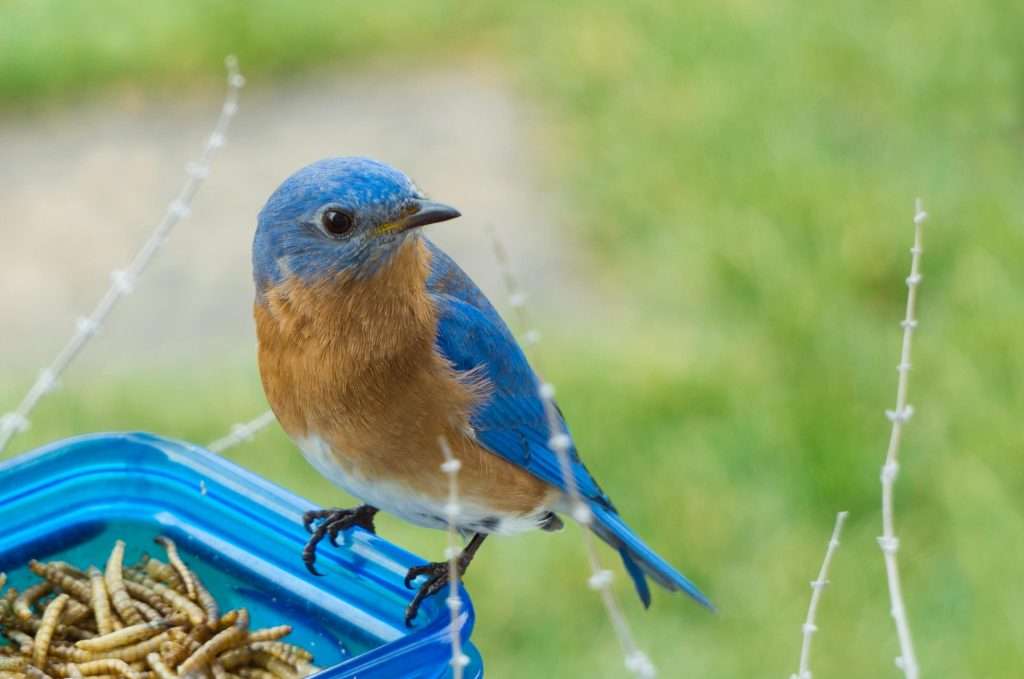
Eastern Bluebird — State bird of Missouri and New York. A nest box in the right spot makes a real difference. 👉 New York State Bird Guide
Greater Roadrunner — New Mexico’s state bird. Doesn’t visit feeders — you’ll need to go find this one. The guides tell you where to look and when. 👉 New Mexico State Bird Guide
Baltimore Oriole — Maryland’s state bird. Arrives in spring and draws attention immediately. They’re especially drawn to halved oranges, grape jelly, and nectar feeders in spring. 👉 Maryland State Bird Guide
👉 All 50 U.S. State Birds — Full Guide
Backyard Bird Setups
Not every yard is the same. A simple hopper and sunflower seed works for most situations, but a small balcony, an apartment deck, or a yard where low maintenance matters needs a different approach. These guides are built around specific setups so you’re not adapting advice meant for a different situation.
👉 Simple Backyard Bird Setup 👉 Small Yard Setup 👉 Apartment & Deck Setup 👉 Low Maintenance Setup
Frequently Asked Questions
What are the most common backyard birds?
The most commonly seen feeder birds across the U.S. are the Northern Cardinal, Black-capped Chickadee, American Goldfinch, Downy Woodpecker, Blue Jay, Mourning Dove, and House Finch. Which ones show up in your yard depends on your region, your feeder setup, and the time of year. The Backyard Birds by State guides cover exactly which species are common in your area.
What is the best bird feeder to start with?
A hopper feeder with black oil sunflower seed is the most reliable starting point for most yards. It attracts the widest variety of birds, holds enough seed to stay active through the day, and works year-round. Once you have that foundation in place, a suet feeder is the best addition — it brings in woodpeckers and nuthatches that would otherwise skip the setup. See the Best Bird Feeders guide for a full comparison of feeder types.
What food attracts the most birds?
Black oil sunflower seed attracts more species than any other single food — cardinals, chickadees, finches, nuthatches, grosbeaks, and many others will all take it. Nyjer (thistle) is the best option specifically for goldfinches and siskins. Suet is essential for woodpeckers, especially through fall and winter when insects are scarce. The Best Bird Seed guide covers exactly which seeds work for which birds.
How do I get more birds to come to my feeder?
Placement matters as much as feeder type. Set your feeder 5–10 feet from shrubs, a fence, or tree cover — birds need a clear flight path in and a quick escape route if they feel exposed. A birdbath nearby makes a significant difference, especially in dry or hot weather. If activity is still low, the most common problem is seed freshness: old or wet seed gets ignored. See How to Attract Backyard Birds for a full placement and setup breakdown.
Where should I start if I’m new to backyard birding?
Start with a hopper feeder, black oil sunflower seed, and placement near cover. Add a birdbath. Within a few days, many yards start seeing activity — and from there, it’s a matter of noticing patterns and learning who’s showing up. The Simple Backyard Bird Setup walks through exactly what to buy and how to set it up.
Keep Exploring
👉 Backyard Birds by Species 👉 Backyard Birds by State 👉 Best Bird Feeders 👉 Best Bird Seed 👉 All 50 U.S. State Birds 👉 Birding Resources by State