


The mourning dove is one of the most common backyard birds in North America, and one of the easiest to overlook. It’s a medium-sized bird — about 9–13 inches long — with a slim body, small head, and a long tapered tail. The plumage is soft brownish-gray with a peachy blush on the chest, and when light hits it right, you’ll catch iridescent pink and green patches on the neck. It looks simple at first glance, and that’s exactly why most people walk past it without a second thought.
Mourning doves readily visit feeders and are present year-round across most of the United States. They’re not quick, darting birds — they tend to move deliberately, walking along the ground or sitting calmly on a perch for extended stretches. That calm, consistent presence is part of what makes them so easy to observe once you start paying attention.
Once mourning doves find a reliable food source in your yard, they quickly become regular visitors — often arriving in pairs or small groups and returning day after day. They’re one of the most rewarding birds to attract for beginners because the setup is simple and the payoff is consistent. If you’re building your first station, How to Attract Backyard Birds is a good place to start.
Jump to What You Need
- Quick Facts
- How to Identify a Mourning Dove
- Habitat & Range
- Best Feeders for Mourning Doves
- Best Food
- Backyard Setup & Placement
- Seasonal Behavior
- Nesting
- Fun Facts
- Common Mistakes
- FAQ
Quick Facts
| Scientific Name | Zenaida macroura |
| Size | 9–13 inches long |
| Wingspan | 17–19 inches |
| Lifespan | Up to ~5 years (wild); up to 19 years recorded |
| Feeder Friendliness | High |
| Range | Year-round across most of the U.S.; migratory in northern Canada |
| Best Feeder | Platform feeder |
| Best Food | Millet, black oil sunflower seeds, safflower |
How to Identify a Mourning Dove

The mourning dove is a soft gray-brown overall, with a peachy-tan wash across the chest and belly. Look for small black spots on the wings and, when the bird turns in good light, iridescent pink and green feathers on the neck. The tail is long and narrow with white-tipped outer feathers — most visible in flight.
Males and females look nearly identical. Males tend to have a slightly more colorful iridescent neck patch and a faint bluish cap, but the difference is subtle and not reliable for field ID. Juveniles are similar to adults but appear scalier and lack the clean adult plumage.
The single best ID trick: That long, tapered tail is the giveaway. In flight, mourning doves show white corners on the tail and produce a distinctive whistling sound with their wings — a soft, rushing whoosh that you’ll start to recognize quickly.
Calls and movement: The mourning dove’s call is a gentle, mournful cooing — “ooh-ooah-oo-oo” — that many people mistake for an owl at first. On the ground, doves walk steadily and bob their heads as they forage, rarely rushing. They tend to sit still for long periods on perches, wires, or feeder edges.
Habitat & Range

The mourning dove is one of the most widespread birds in North America, present year-round across the lower 48 states and into Mexico. Northern populations migrate south in fall, but in most of the country — including the Midwest and South — they’re a consistent presence through every season.
In the backyard context, mourning doves are one of the most adaptable species you can attract. They favor open areas with scattered trees or shrubs, which describes most residential yards. They’re equally comfortable in rural fields, suburban neighborhoods, and along woodland edges — as long as there’s open ground to forage on and a nearby perch to retreat to.
Best Feeders for Mourning Doves
The mourning dove is one of the most feeder-friendly ground birds you can attract in a backyard. If you’re comparing options across feeder types, Best Bird Feeders breaks down what works for different birds — but for a mourning dove, the decision is usually straightforward.
Platform Feeder ⭐ Best Choice
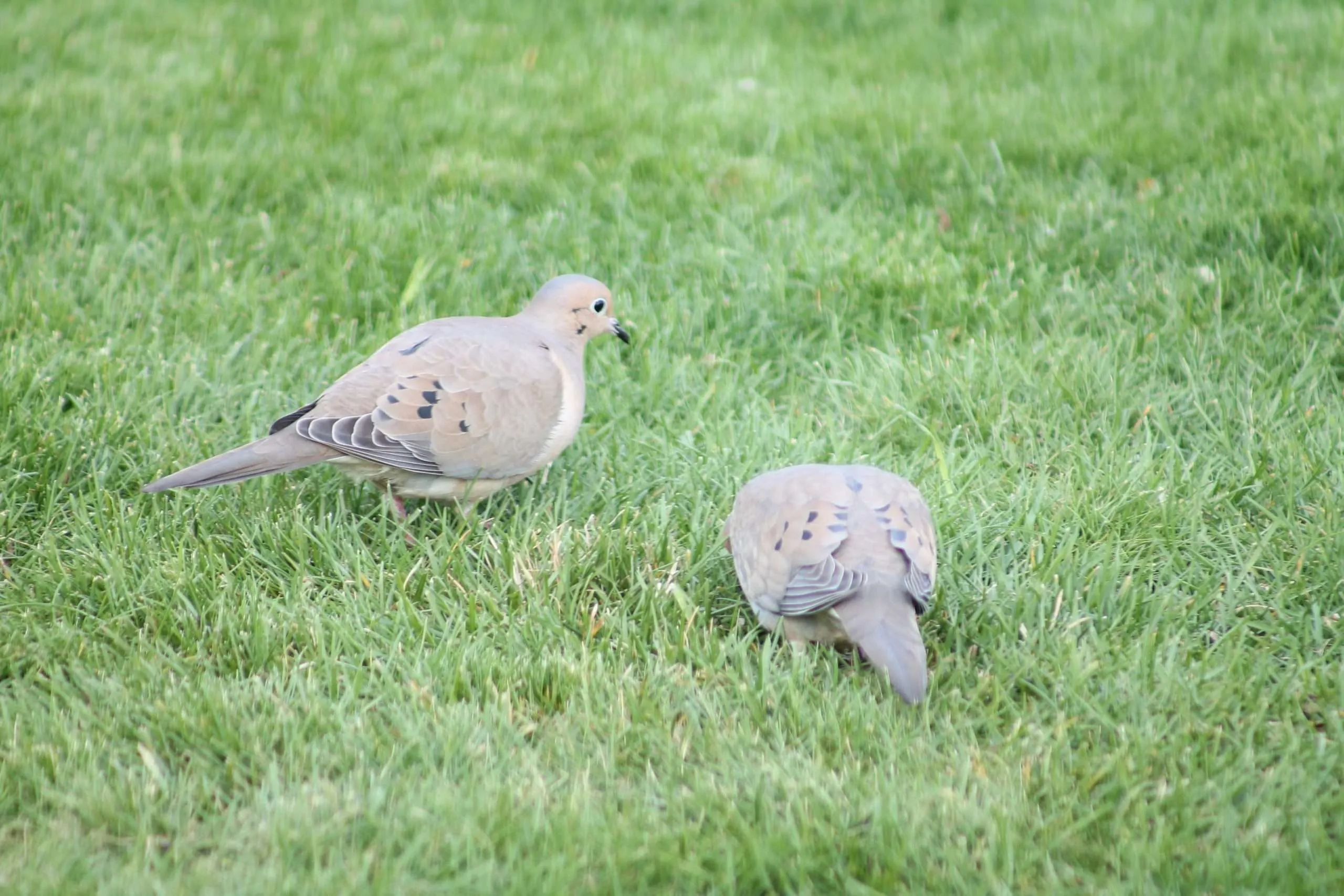
Mourning doves are ground-level foragers by nature. They’re built to walk and peck, not cling — so an open, flat feeding surface is exactly what they’re looking for. A platform feeder gives them room to land, turn around, and eat comfortably without fighting for position at small perch ports.
Platform feeders also allow doves to eat in pairs or small groups, which is how they naturally show up. A tray-style platform at or near ground level tends to get the most use, though elevated versions on a post work well too if ground predators are a concern in your yard.
The main downside is exposure — platform feeders don’t protect seed from rain or wind as well as covered designs. Choosing a platform with a roof or mesh bottom drainage will help keep seed fresher longer.
👉 Platform Bird Feeders — Full Guide
Hopper Feeder — Good Secondary Option
Mourning doves can and will use hopper feeders, especially if the feeder has a wide ledge or tray beneath the seed ports. They’re too large to use small perch ports, so what matters is whether there’s enough flat landing space around the feeder opening.
A hopper feeder works well in a mixed station because it attracts cardinals, finches, and chickadees simultaneously — and doves will often clean up spilled seed from the ground below, which is where they’re most comfortable anyway.
👉 Hopper Bird Feeders — Full Guide
Best Food for Mourning Doves
Getting the food right makes a bigger difference than most people expect. Choosing the right food can dramatically increase how often mourning doves visit your yard — more so than any feeder upgrade. Mourning doves are seed eaters that forage almost exclusively on the ground or flat surfaces, and they gravitate toward small, easy-to-swallow seeds that mirror what they’d find in open fields.
Millet ⭐ Top Choice
White proso millet is the single best food for mourning doves. It’s small, easy to swallow whole, and closely mirrors the wild grasses and weed seeds that make up most of their natural diet. Doves will actively seek it out over other seed options when it’s available.
Millet works best year-round but is especially effective in fall and winter when natural seed sources in the yard are depleted. A mix that leads with millet — or straight millet in a platform or ground tray — will bring doves in consistently.
Black Oil Sunflower Seed
Mourning doves readily eat black oil sunflower seed, particularly the smaller, thinner-shelled variety that’s easier to crack. It’s a reliable fallback and performs especially well in mixed feeders where you’re also trying to attract cardinals and finches.
Safflower Seed
Safflower is a solid secondary option — mourning doves eat it willingly, and it has the added benefit of being largely ignored by squirrels and European starlings. If pest birds are a problem at your feeder, leaning on safflower can help shift who shows up.
Cracked Corn
Cracked corn works well in ground trays and platform feeders. It’s inexpensive and doves take to it readily, though it tends to attract a broader mix of birds — including species you may not want in large numbers, like house sparrows or grackles. Use it selectively.
What to Avoid
Avoid nyjer (thistle) seed — mourning doves don’t eat it and it’s too small to be useful to them. Large whole peanuts are also a poor fit; doves can’t crack shells effectively and will ignore them. Mixes heavy in filler seeds like oats, wheat, or flax will result in a lot of discarded seed on the ground without much dove activity at the feeder.
Beginner shortcut: Start with a platform feeder and white proso millet. That combination reliably attracts mourning doves and creates the repeat visits that make backyard birding satisfying.
Backyard Setup & Placement

Place your platform feeder in a relatively open area with a clear line of sight in multiple directions. Mourning doves are cautious birds and prefer to see what’s around them while eating. Positioning the feeder 5–10 feet from a fence, shrub, or low tree gives them a natural escape route without making them feel trapped.
Keep the feeder at or near ground level where possible — a low post-mounted platform or a tray directly on the ground will see the most dove activity. Avoid placing feeders too close to dense brush or tall cover where cats or other predators could hide nearby.
Adding a birdbath within sight of the feeder noticeably increases dove activity. Mourning doves drink frequently — sometimes multiple times a day — and a nearby water source keeps them returning to the same area of your yard. Ground-level or low-set baths are preferred over elevated pedestal styles.
This setup works because mourning doves are open-country foragers that evolved in grasslands and farmland edges — they’re wired to prefer visibility and flat ground, and a platform feeder in an open area directly mimics the conditions where they feel most secure and comfortable.
👉 How to Attract Backyard Birds
👉 Simple Backyard Bird Setup
Seasonal Behavior
Winter: Mourning doves are among the most reliable feeder visitors in winter. They show up consistently and tend to spend more time at the feeder than in warmer months, often arriving in small flocks of 5–10 birds at once. Feeder activity peaks in cold weather when natural food is scarce.
Spring: Doves become more active and vocal in spring as breeding season begins. You’ll hear the distinctive cooing frequently — often from a high perch like a utility wire or rooftop. Feeder visits continue but may be shorter as birds range more widely during courtship.
Summer: Breeding pairs are occupied with nesting and may be less visible at feeders during peak nesting weeks. Young-of-year doves (softer, scalier looking) start appearing at feeders by midsummer. Activity generally remains moderate through the season.
Fall: As temperatures drop and natural seeds diminish, mourning doves return to feeders in larger numbers. Fall is a good time to refresh your setup — clean feeders, restock with fresh millet, and doves will find you quickly. Migration brings additional birds through from the north, which can temporarily increase yard activity.
Nesting
Mourning doves build loose, flimsy-looking platform nests from thin twigs, typically placed in a tree fork, on a horizontal branch, or on a window ledge or building structure. The nests look almost too simple to work — and sometimes they fail — but doves raise multiple broods per year to compensate.
There’s no nest box that attracts mourning doves directly, but leaving small platforms or ledges on outbuildings undisturbed can encourage them to use your yard as a nesting site. Doves are not territorial about nesting locations and will often return to the same spot across multiple years.
Eggs per clutch: 2
Broods per year: 2–6 (one of the highest among North American birds)
Incubation: ~14 days
Nestling period: ~15 days before young leave the nest
Fun Facts
Mourning doves are among the most prolific breeders of any North American bird — raising up to 6 broods in a single year in warm climates. Most birds manage 2–3.
The whistling sound mourning doves make in flight isn’t a call — it comes from their wings. Specialized feathers produce the distinctive whooshing sound when the bird takes off, which researchers believe may serve as an alarm signal to other doves nearby.
Both parents share incubation duties. Males typically sit on the nest during the day; females take over at night — a division of labor that’s consistent and predictable once you know to look for it.
Mourning doves swallow grit — small stones and sand — to help grind seeds in their muscular gizzard. You may see them picking at sandy soil or a gravel path near the feeder. This is normal, healthy foraging behavior.
Common Mistakes
Wrong food choice. The most common mistake is loading a feeder with a mixed seed blend that’s mostly filler — oats, wheat, milo, and red millet — and expecting doves to respond. Mourning doves will ignore most of those seeds and move on. White proso millet is what they’re after. If your feeder isn’t drawing doves, check what’s in the bag before anything else.
Poor placement. Hanging a tube feeder and wondering why doves never use it is a common frustration. Mourning doves can’t cling to small perches and aren’t built for tube-style feeders. They need a flat surface — a platform feeder, a ground tray, or at minimum a wide hopper ledge. Placement also matters: feeders too close to dense cover make doves nervous. They want to see their surroundings.
Seasonal misunderstanding. Many people notice doves disappear during summer and assume something is wrong. In most cases, breeding season is keeping them busier and more dispersed. They haven’t gone far — they’re just nesting. Feeder visits resume reliably in fall, often with new juvenile birds showing up alongside the adults.
Removing ground cover too aggressively. Mourning doves also pick seeds off the ground directly, especially seed dropped from elevated feeders. Raking or cleaning too frequently under feeders removes a natural food source doves rely on. Leaving a small debris zone beneath your feeder station actually increases how much time doves spend in your yard.
Frequently Asked Questions
What is the best feeder for a Mourning Dove?
A platform feeder is the best option — mourning doves are ground foragers and need a flat, open surface to land and eat comfortably. Tube feeders and feeders with small perch ports don’t work for them. If you want to use a hopper, choose one with a wide tray or ledge below the seed opening. See the full Platform Bird Feeders — Full Guide for specifics on styles and placement.
What food attracts Mourning Doves the most?
White proso millet is the top choice — it closely mirrors what mourning doves eat in the wild and they seek it out over most other seeds. Black oil sunflower seed and safflower are good secondary options. Avoid nyjer seed, large peanuts, and filler-heavy mixes. The Best Bird Seed guide covers the full breakdown of what works for which birds.
How do I identify a Mourning Dove?
Look for a slim, medium-sized bird in soft gray-brown with a long, tapered tail tipped in white. The chest has a peachy-tan wash and there are small black wing spots. In flight, the white tail corners are visible and the wings make a distinctive whistling sound on takeoff. The easiest comparison: if you see a dove-shaped bird with a noticeably long, pointed tail, it’s almost certainly a mourning dove.
Do Mourning Doves migrate?
Most mourning doves in the lower 48 states are year-round residents. Birds in the northern U.S. and Canada do migrate south for winter, which can bring more doves through your yard in fall. In most of the country — including the Midwest and Southeast — you can expect mourning doves at your feeder in every season.
Why did my Mourning Dove stop coming to the feeder?
The most common reason is breeding season. Doves become less feeder-dependent in late spring and summer while nesting. They’ll return reliably in fall. If the absence happens outside of summer, check the food first — stale or mold-prone seed, especially millet exposed to moisture, can drive doves away quickly. Also consider whether anything has changed in the immediate area of the feeder, like new disturbance or dense vegetation growth nearby.
Are Mourning Doves good for beginners?
Mourning doves are one of the best birds for beginners. They’re easy to identify, reliably present, and require a simple setup — a platform feeder and millet is all it takes to get started. They’re calm, visible, and tend to stay long enough to actually observe, which makes them more rewarding to watch than fast-moving feeder birds. If you’re just getting into backyard birding, mourning doves are an excellent early win.
What other birds might I see alongside a Mourning Dove?
Mourning doves often share platform feeders and ground feeding areas with Northern Cardinals, Dark-eyed Juncos, house sparrows, and White-throated Sparrows — all ground or low-feeder birds that favor similar seed. Blue Jays frequently show up at platform feeders as well, though they tend to dominate briefly and move on. If you’re attracting doves, you’re likely building the kind of open-style setup that draws a good variety of species.
Related Pages
👉 Platform Bird Feeders — Full Guide
👉 How to Attract Backyard Birds
👉 Backyard Birds by Species
👉 Northern Cardinal
👉 Blue Jays